Understanding Active Noise Cancellation Across Premium Earbuds
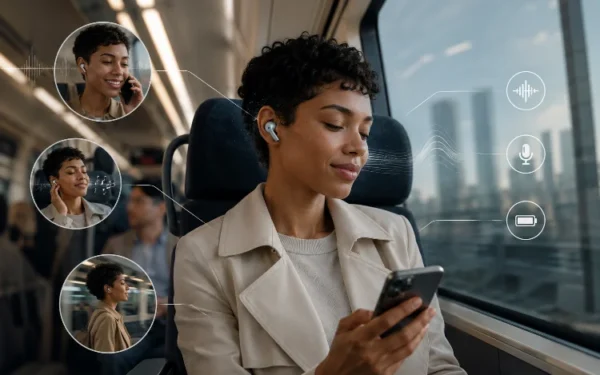
Premium wireless earbuds love to promise silence. Put them in, turn on Active Noise Cancellation, and supposedly the engine rumble, office chatter, air conditioner, and busy street around you simply disappear.
Real life is more complicated.
Active noise cancellation across premium earbuds can vary significantly even when every product claims advanced ANC.
Some earbuds are excellent at removing deep engine noise but allow voices through. Others depend heavily on a perfect ear-tip seal, while newer models continuously adjust their cancellation algorithms according to your surroundings.
The technology has also improved dramatically. Current flagship models such as the Apple AirPods Pro 3, Sony WF-1000XM6, Bose QuietComfort Ultra Earbuds (2nd Gen), and Samsung Galaxy Buds4 Pro can reduce a remarkable amount of outside sound despite their tiny size.
Still, stronger ANC does not automatically mean a better overall earbud.
Comfort, passive isolation, transparency quality, wind handling, battery life, and how naturally the system reacts to changing environments all influence the experience.
Here is what really separates premium ANC earbuds.
How Active Noise Cancellation Actually Works
ANC starts with microphones listening to the noise around – or sometimes inside – your ears.
The earbuds analyze incoming sound waves and generate an opposing signal designed to reduce the amount of unwanted sound reaching your eardrum. This technique works especially well with predictable, continuous noises.
Airplane engines are the classic example.
Low-frequency rumbles from trains, buses, air conditioners, and machinery are relatively consistent, giving the ANC processor enough information to produce an effective opposite signal.
Human voices are harder.
Speech changes quickly and contains plenty of mid- and higher-frequency information. ANC can reduce it, but physical isolation from the ear tips usually becomes much more important.
Premium earbuds often combine feedforward microphones outside the earbud with feedback microphones closer to the ear canal. The system can then monitor both incoming noise and the result of its own cancellation.
That feedback loop is what makes modern ANC feel almost instantaneous.
Passive Isolation Is Half of the ANC Story
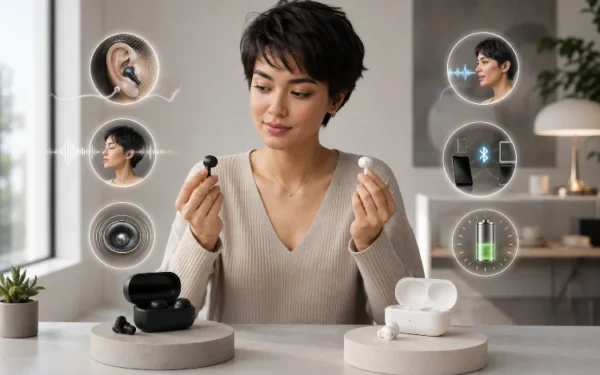
One of the biggest mistakes when comparing noise-cancelling earbuds is judging the electronics without considering the physical seal.
Silicone or foam tips physically block sound before the ANC system has to do anything.
This is especially important for higher-frequency noises such as keyboard clicks, parts of human speech, and sharp environmental sounds. ANC usually performs its most dramatic work lower in the frequency range, while passive isolation handles much of the rest.
Sony explicitly advises WF-1000XM6 owners to test different ear-tip sizes because gaps between the ear and earbud can weaken noise-cancelling performance. The best size can even differ between your left and right ear.
That means an expensive pair of earbuds with technically excellent ANC can perform poorly if they do not fit you.
A secure seal also improves bass response, so getting the fit right benefits both noise reduction and sound quality.
Adaptive ANC Is Replacing Simple On-or-Off Cancellation
Early ANC products were relatively simple: noise cancellation was either active or inactive.
Premium earbuds now behave much more dynamically.
Bose’s QuietComfort Ultra Earbuds (2nd Gen), for example, use CustomTune technology to personalize sound and noise cancellation around the listener’s ear. Their updated ActiveSense system also adjusts how noise control reacts to changing surroundings.
Samsung’s Galaxy Buds4 Pro similarly includes Adaptive ANC and Adaptive Noise Control. Samsung says its algorithm adjusts noise cancellation according to the earbud’s position and the surrounding enviroment.
Sony takes a similar approach through Adaptive Sound Control, which can adjust ambient sound settings based on activity and context.
This can make ANC more convenient, but aggressive automatic adjustments are not always desirable. Some listeners prefer a fixed maximum setting because it behaves more predictably.
How Bose, Sony, Apple, and Samsung Compare
Independent measurements show just how close current premium earbuds have become.
In SoundGuys’ laboratory testing, the AirPods Pro 3 reduced outside noise by an average of about 90% across tested frequencies, giving them the strongest result the publication had measured. Sony’s WF-1000XM6 followed closely at roughly 88% average noise reduction.
The difference may sound larger on paper than it feels.
SoundGuys notes that Sony’s two-percentage-point gap compared with the AirPods Pro 3 is unlikely to be obvious for most people in everyday use. Sony also performed particularly strongly at certain low and mid frequencies.
The Bose QuietComfort Ultra Earbuds (2nd Gen) reduced external noise by approximately 85% on average in the same publication’s testing.
Samsung’s Galaxy Buds4 Pro came in remarkably close at around 84% average attenuation, while improving significantly over the previous Galaxy Buds generation in portions of the midrange.
The practical takeaway is that all four belong in the premium ANC category. Fit, ecosystem, comfort, and features can easily matter more than a few percentage points.
AirPods Pro 3: Excellent ANC, Especially for Apple Users
Apple made major noise-cancellation improvements with the AirPods Pro 3.
Apple says the model provides up to twice the ANC performance of AirPods Pro 2 and four times that of the original AirPods Pro under its own testing methodology.
The earbuds also combine ANC with Adaptive Audio, Transparency mode, Conversation Awareness, Loud Sound Reduction, and pressure-equalizing vents.
That combination makes them particularly polished for users who regularly move between quiet rooms, public transportation, offices, and conversations.
Their biggest limitation is ecosystem dependence.
AirPods still function as Bluetooth earbuds with Android, but much of their deeper software integration is designed around Apple devices. Android users can find similarly strong ANC with considerably better app control from Sony or Bose.
For iPhone owners, however, the combination of ANC performance and ecosystem integration is hard to beat.
Sony WF-1000XM6: Strong Isolation Plus Excellent ANC
Sony’s WF-1000XM6 demonstrates why physical design and electronic cancellation work best together.
SoundGuys measured around 88% average noise reduction, while also noting that Sony’s passive isolation is particularly effective. The XM6 uses eight microphones across the two earbuds, up from six on the previous model.
The extra microphone data helps the processor analyze environmental noise more accurately.
Sony also performs especially well at reducing some lower-frequency and mid-frequency noise, making the earbuds suitable for flights, commuting, and office use.
The Sound Connect app provides substantial control over the listening experience, including Adaptive Sound Control.
Fit remains essential, though. Sony’s own support documentation emphasizes correct tip sizing when ANC seems weak.
For Android users wanting powerful ANC without being locked deeply into one smartphone brand, the XM6 is one of the most balanced premium choices.
Bose QuietComfort Ultra Earbuds 2: ANC Remains the Main Attraction
Bose has built much of its reputation around noise cancellation, and the QuietComfort Ultra Earbuds (2nd Gen) continue that tradition.
They use four microphones per earbud and combine electronic ANC with Bose’s CustomTune calibration and stability-band design.
SoundGuys measured approximately 85% average external-noise reduction, which remains among the strongest results it has recorded from wireless earbuds.
Bose also lets users adjust cancellation strength. A 2026 software update added noise control from 0 to 100%, including the ability to disable ANC entirely.
One limitation appears outdoors.
SoundGuys found that wind can still create unwanted noise around the microphones, something that can affect many ANC designs.
For planes, offices, and public transport, Bose remains extremely competitive. For frequent cycling or very windy outdoor environments, microphone behavior deserves more attention.
Transparency Mode Is Just as Important as Silence
Maximum isolation is not always what you want.
Walking near traffic, ordering coffee, hearing an airport announcement, or speaking with a coworker often requires quickly letting the outside world back in.
That is where transparency or ambient modes become important.
Good transparency processing should reproduce surrounding sound naturally without excessive hiss, delay, or an obviously digital character.
Apple combines Transparency with Adaptive Audio and Conversation Awareness.
Bose calls its transparency system Aware Mode, while ActiveSense can soften sudden loud sounds without completely disconnecting you from the environment. Samsung provides Ambient Sound alongside Adaptive Noise Control.
A premium ANC system should therefore be judged in both directions.
It needs to remove unwanted noise effectively, but it should also restore your environmental awareness quickly and naturally when needed.
For daily use, that responsivness can matter almost as much as maximum cancellation.
What Should You Look for When Comparing ANC Earbuds?
Do not judge earbuds only by marketing claims such as “2x better ANC.”
Look for independent attenuation measurements, preferably from the same testing methodology. Comparing percentages from completely different labs can be misleading.
Pay attention to frequency performance as well.
Strong low-frequency cancellation is useful for airplanes and buses, while good passive isolation across the mids and highs helps reduce voices and office noise.
Then consider fit.
No algorithm can completely compensate for badly fitting ear tips. If possible, choose earbuds offering several tip sizes or reliable fit-testing software.
Finally, consider your normal environment. Bose may appeal to frequent travelers seeking aggressive cancellation.
Sony provides an excellent mix of isolation, ANC, sound, and Android flexibility. AirPods Pro 3 are particularly compelling for Apple users, while Galaxy Buds4 Pro offer strong ANC and deeper features for Galaxy owners.
The “best” ANC is the one that works consistantly in the places you actually use it.
Active noise cancellation in premium earbuds has reached a point where several models can remove the vast majority of everyday environmental noise.
AirPods Pro 3 currently deliver exceptional measured attenuation, while Sony’s WF-1000XM6 comes remarkably close and adds strong passive isolation.
Bose’s QuietComfort Ultra Earbuds (2nd Gen) remain highly effective and customizable, while Samsung’s Galaxy Buds4 Pro combine competitive cancellation with adaptive Galaxy features.
But ANC quality is about more than one number.
Ear-tip fit, passive isolation, microphone design, adaptive algorithms, transparency quality, wind behavior, and comfort all influence the result.
Before buying, compare independent measurements and consider where you listen most often. The best premium earbuds should not simply make the world quieter – they should give you precise control over exactly how much of that world you want to hear.