
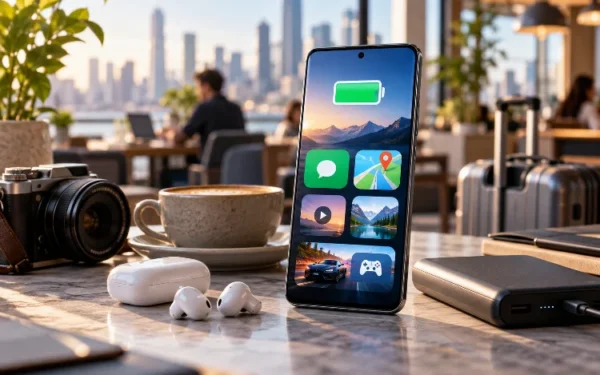
Best Battery Phones for Navigation, Streaming, and Mobile Work
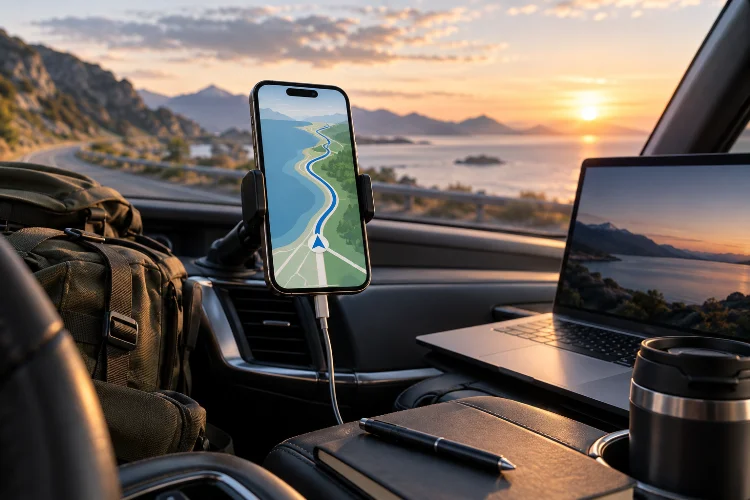
A smartphone can claim “all-day battery life,” but that promise becomes much harder to keep when you actually use the phone all day.
Turn on GPS navigation for a long drive, stream videos over 5G, answer work messages, join video calls, upload files, and use your phone as a hotspot, and battery percentage can disappear surprisingly quickly.
These activities often stress several components at once, including the display, modem, processor, GPS receiver, and speakers.
That is why the best battery phones for navigation, streaming, and mobile work need more than a large battery.
They also need an efficient processor, good thermal management, adaptive display technology, reliable connectivity, and fast charging when you finally reach an outlet.
In 2026, phones such as the OnePlus 15, OPPO Find X9 Pro, HONOR Magic8 Pro, and Samsung Galaxy S26 Ultra approach that challenge differently. Some focus on enormous silicon-carbon batteries, while others rely more heavily on efficiency and software optimization.
Here is how they compare for people who genuinely spend most of the day on their phones.
OnePlus 15: Best Overall for Heavy Daily Use
The OnePlus 15 is an obvious starting point for anyone prioritizing maximum endurance.
It carries a huge 7,300mAh battery and uses Qualcomm’s Snapdragon 8 Elite Gen 5 processor. Its 6.78-inch display also supports adaptive refresh rates between 1Hz and 120Hz during normal use, helping reduce unnecessary display power consumption.
The real advantage becomes clear in endurance testing.
Tom’s Guide recorded 25 hours and 13 minutes in its standardized battery test, which continuously browses the web over cellular connectivity with the display set to 150 nits. That result placed the OnePlus 15 well ahead of many premium competitors.
That makes it particularly useful for mixed heavy workloads. Navigation, email, social media, document editing, streaming, and occasional gaming can all happen without constantly monitoring the battery icon.
Charging is another strength. The global model supports up to 120W SUPERVOOC charging, while the U.S. version supports 80W wired charging.
For people who regularly work away from a desk, it is one of the most complete battery-focused flagships available.
OPPO Find X9 Pro: Best for Streaming and Long Travel Days
The OPPO Find X9 Pro goes even further in raw capacity with its 7,500mAh battery.
It combines that large cell with MediaTek’s Dimensity 9500 processor, a 120Hz AMOLED display, Wi-Fi 7, dual-frequency GPS support, and 80W SUPERVOOC charging. Those specifications make it particularly well suited to travelers and heavy media users.
Independent battery testing is impressive.
Notebookcheck measured 34 hours and 19 minutes of Wi-Fi browsing and 41 hours and 13 minutes of local 1080p video playback with the display adjusted to 150 cd/m². Even under maximum load, the device lasted just under five hours.
Those numbers should not be directly compared with Tom’s Guide results because the methodologies are different, but they demonstrate excellent endurance within Notebookcheck’s testing system.
The Find X9 Pro is especially attractive for someone spending long periods on YouTube, Netflix, downloaded video, social media, or web browsing.
OPPO also specifically promotes the phone for active tasks such as 4K recording, gaming, and streaming, while its silicon-carbon battery technology allows the large capacity to fit into a relatively normal flagship body.
HONOR Magic8 Pro: A Strong Balance for Travelers
Not everyone wants the absolute biggest battery possible.
The HONOR Magic8 Pro offers a more balanced approach, pairing a 6,270mAh battery in its global version with the Snapdragon 8 Elite Gen 5.
That combination delivers strong endurance without requiring an unusually bulky phone.
Notebookcheck measured 26 hours and 52 minutes of Wi-Fi browsing in its standardized test. The result comfortably exceeded several competing premium Android phones tested under the same methodology.
For navigation and travel, that kind of efficiency matters.
GPS itself is only part of the power drain during navigation. The display may stay bright for hours, the modem continuously downloads traffic information, location services remain active, and the processor constantly updates maps and routing.
A phone with good idle effeciency and a large battery therefore has an advantage over a device that simply performs well in short benchmarks.
The Magic8 Pro is a good middle-ground option for users who want flagship cameras and performance while still making endurance a major priority.
Galaxy S26 Ultra: Best for Mobile Productivity
Samsung’s Galaxy S26 Ultra takes a very different approach.
Its battery remains at 5,000mAh, much smaller than the cells inside the OnePlus 15 and Find X9 Pro. Yet Samsung still manages respectable endurance through processor, display, and software optimization.
Tom’s Guide measured 16 hours and 10 minutes in its cellular web-browsing battery test. That is nowhere near the OnePlus 15’s 25-hour result, but it is still solid performance from a significantly smaller battery.
Where Samsung becomes interesting is productivity.
The large 6.9-inch display, S Pen functionality, multitasking features, large storage options, and mature Galaxy software ecosystem make the S26 Ultra particularly useful for email, documents, notes, presentations, and other mobile-work tasks.
Samsung also increased wired charging to 60W. The company says the phone can reach approximately 75% charge in around 30 minutes with compatible charging equipment.
If battery life is your only priority, other phones win. If you need a highly capable work device with realiable all-day endurance, Samsung remains compelling.
Why Navigation Drains Batteries So Quickly
Navigation is one of the hardest everyday workloads for a smartphone battery.
GPS positioning stays active, mobile data downloads map and traffic information, and the display often operates at high brightness because navigation frequently happens outdoors or inside a bright vehicle.
Temperature can also become a problem.
A phone mounted near a windshield may receive direct sunlight while simultaneously running navigation and charging. High temperatures can cause the device to reduce charging speed or screen brightness to protect its battery and internal components.
This means a good navigation phone needs more than capacity.
Efficient connectivity, thermal management, bright displays, and fast charging all matter. A large battery provides additional margin when several of those systems are running simultaneously.
For delivery drivers, rideshare workers, travelers, or anyone using maps for hours each day, this workload deserves more attention than a simple video-playback claim.
Streaming Battery Life Depends on More Than the Screen
Video streaming sounds simple, but the workload can vary dramatically.
Streaming downloaded content over Wi-Fi at moderate brightness is relatively easy on modern phones. Watching high-resolution HDR video over 5G at maximum outdoor brightness is much more demanding.
Network conditions also matter.
When cellular reception is weak, the modem may require more energy to maintain a stable connection. That means the same hour of Netflix or YouTube can consume different amounts of battery depending on where you are.
Display efficiency becomes important too. Modern adaptive OLED screens can reduce power consumption when high refresh rates are unnecessary.
For pure video endurance, the OPPO Find X9 Pro is particularly impressive based on Notebookcheck’s 41-hour local video result.
The OnePlus 15 also claims up to 31 hours of video playback under OnePlus’ own test conditions.
For frequent streamers, these results are more useful than mAh figures alone.
Mobile Workers Should Consider Charging and Connectivity Too
Battery longevity matters, but mobile work is also about recovering power quickly.
Imagine your phone drops to 25% between meetings. A device with very fast charging may recover enough energy during a short lunch break to comfortably finish the day.
Connectivity is equally important.
Video conferencing, cloud storage, hotspot tethering, VPN connections, and file transfers can continuously stress the modem and processor. Modern Wi-Fi standards and efficient cellular hardware can therefore influence real-world endurance.
Storage and RAM also matter for productivity because frequently reloading applications creates unnecessary work.
This is why the best work phone is not necessarily the model with the largest battery. You need a combination of endurance, connectivity, charging, multitasking, display quality, and software reliability.
For maximum battery life, OnePlus and OPPO currently have a clear advantage. For broader productivity features, Samsung remains particularly strong.
Which Battery Phone Should You Choose?
For the longest mixed-use endurance, the OnePlus 15 is the easiest recommendation. Its 7,300mAh battery and exceptional standardized battery result make it suitable for almost every demanding workload.
The OPPO Find X9 Pro is arguably even more interesting for frequent streaming and long travel days thanks to its 7,500mAh battery and outstanding video and Wi-Fi endurance.
The HONOR Magic8 Pro offers a more balanced package with strong browsing endurance and flagship performance.
Meanwhile, the Galaxy S26 Ultra makes the most sense for users who prioritize productivity tools, multitasking, S Pen functionality, and Samsung’s ecosystem alongside solid battery life.
There is no universal winner. The best choice depends on which workload consumes most of your day.
The best battery phones for navigation, streaming, and mobile work need to survive much more than casual browsing.
GPS navigation stresses location services, cellular connectivity, and display brightness. Streaming combines screen and network consumption, while mobile productivity adds multitasking, video calls, cloud syncing, and hotspot usage.
The OnePlus 15 currently offers outstanding mixed-use endurance, while the OPPO Find X9 Pro excels at long browsing and video sessions.
HONOR’s Magic8 Pro provides a strong balance, and Samsung’s Galaxy S26 Ultra remains an excellent productivity-focused alternative despite its smaller battery.
Before buying, compare standardized endurance tests alongside charging speed, connectivity, display efficiency, and software features. Choose around your actual workload, and your next phone is far more likely to remain useful from the first morning email to the final trip home.
Related Articles