
Android Flagship Performance Across Premium Price Segments
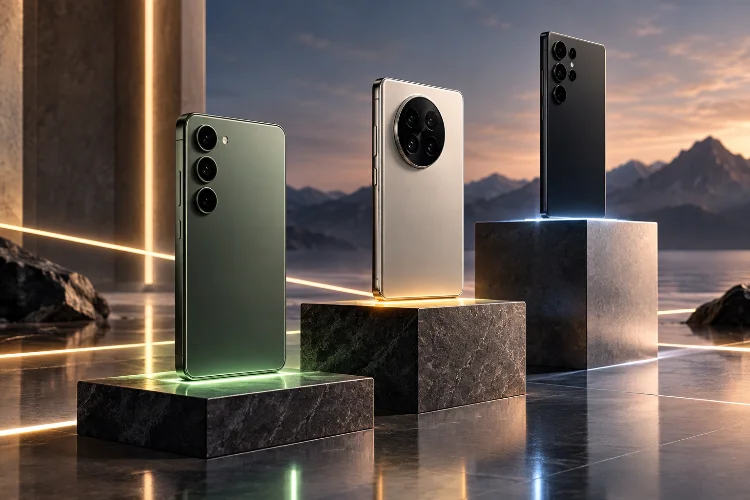
Buying a premium Android phone used to be simple: spend more money and you would usually get more speed. That rule is much less reliable today.
Several phones below the ultra-premium price ceiling now use the same class of flagship processor found in devices costing hundreds of dollars more.
That makes Android flagship performance more interesting than ever.
A $900 phone can sometimes feel just as fast as a $1,300 model in everyday use, while an expensive Ultra phone may justify its higher price through cameras, display quality, build materials, storage, or software features rather than raw processing power.
The real gap depends on more than the chipset name. Cooling, power limits, RAM, storage, display resolution, and software tuning can all change how fast a phone feels after five, ten, or thirty minutes of heavy use.
So, instead of assuming “more expensive means faster,” it makes more sense to compare premium Android phones by price segment and by the type of performance you actually need.
$70-$899: Flagship Speed Without Every Luxury
The lower premium tier has become extremely competitive. Phones in this range can use top-level processors while cutting costs in areas such as camera hardware, wireless charging, materials, or secondary features.
The OnePlus 15 is a good example. Its U.S. base model launched at $899.99 with 12GB of RAM and 256GB of storage, yet it uses flagship-class Snapdragon hardware. That gives buyers serious CPU and GPU power without crossing into Ultra pricing.
This is where price-to-performace can be excellent. App launches, multitasking, photo processing, and demanding games may feel very close to more expensive phones.
The catch is sustained speed. Android Authority found strong benchmark performance from the OnePlus 15, but also noted thermal limitations under prolonged stress. Peak speed and long-session speed are not always the same thing.
$900-$1,199: The Sweet Spot for Most Power Users
Around the $1,000 mark, premium Android phones usually become more complete. You are paying not only for a fast processor, but also for better displays, cameras, connectivity, software support, and more polished hardware.
Google’s Pixel Pro line shows how this segment can prioritize a different type of performance. The Pixel 10 Pro launched at $999 with Tensor G5.
Review testing found that its raw CPU and GPU benchmark performance still trailed Snapdragon-based rivals, yet everyday apps and the interface remained smooth.
That difference matters. A lower synthetic score does not automatically mean a slow phone. Camera processing, AI tools, animation quality, memory management, and software optimization all shape the real experience.
For many buyers, this segment delivers the best mix of speed, features, and long-term value without paying for every Ultra-level extra.
$1,200+: Ultra Phones Add Features Faster Than Raw Speed
At the top of the market, price stops scaling neatly with speed. Samsung’s Galaxy S26 Ultra starts at $1,299.99 in the U.S., but that premium also covers advanced cameras, specialized display technology, S Pen functionality, AI features, and larger storage options.
Its gaming performance is strong. Notebookcheck measured about 60fps in Genshin Impact and more than 100fps in supported PUBG Mobile settings. However, the same testing showed performance reduction under sustained load as the phone controlled heat.
That is normal for thin modern flagships. What matters is how much performance remains after throttling starts, not whether throttling happens at all.
In other words, an Ultra phone is usually the most complete device, but it may not deliver dramatically better everyday speed than a cheaper flagship.
Chipset Generation Matters, but Cooling Matters Almost as Much
Modern flagship processors are incredibly powerful. Qualcomm says Snapdragon 8 Elite Gen 6 improves CPU performance by 10% and GPU performance by 35% over the previous generation, while also targeting significantly better power effeciency.
Those figures describe the platform, not every phone built around it. Manufacturers still choose different cooling systems, power targets, battery designs, and software limits.
Two phones with the same chip can therefore behave very differently. One may win the first benchmark run and then slow down after several minutes. Another may start slightly lower but hold a more consistant level of performance.
For gamers, video editors, emulator users, and other heavy users, sustained performance is often more useful than a record-breaking peak score.
Gaming and AI Can Completely Change the Ranking
Gaming phones are the biggest exception to the usual price hierarchy. Larger cooling systems, aggressive power profiles, and even active fans can help a cheaper device maintain higher frame rates than a more expensive mainstream flagship.
Android Authority’s testing of Snapdragon 8 Elite Gen 5 phones showed that a gaming-focused REDMAGIC device with fan-assisted cooling handled demanding stress testing better than some mainstream models using the same generation of silicon.
That is why long-term frame-rate stability matters more than one benchmark number. A mainstream flagship may look faster on paper but become slower during a long gaming session as temprature rises.
AI creates another type of competition. Google Tensor chips focus heavily on computational photography and AI-assisted features, while Snapdragon and MediaTek platforms combine powerful CPUs and GPUs with increasingly capable NPUs.
MediaTek’s Dimensity 9400, for example, combines an all-big-core CPU, Immortalis-G925 graphics, and an upgraded NPU aimed at generative AI workloads. MediaTek also claims major single-core, multicore, GPU, and efficiency improvements over its previous flagship generation.
“Fastest” now depends on whether you care most about gaming, AI, photography, or general productivity.
What Should You Compare Before Buying?
Start with your real workload. If you mainly browse, stream, use social media, take photos, and multitask, almost every modern premium Android phone has more than enough raw processing power.
For gaming or creative work, pay closer attention to sustained GPU performance, cooling, battery drain, and frame-rate stability. For photography and AI, the image processor, NPU, software pipeline, and manufacturer features can matter more than a Geekbench score.
Storage and RAM also shape responsiveness. Fast storage helps with large apps and file transfers, while enough RAM keeps more apps active in the background.
Most importantly, compare devices inside your actual budget. Spending another $300 may buy a better camera, brighter display, or more premium design, but only a small gain in everyday speed.
Android flagship performance is no longer tied neatly to price.
Phones in the $700-$899 range can offer genuine flagship speed, $900-$1,199 models often provide the strongest all-around value, and $1,200+ Ultra phones usually justify their cost through cameras, displays, materials, and specialized features rather than dramatically faster everyday performance.
The smarter approach is to look beyond the processor name. Compare sustained speed, thermal behavior, gaming stability, AI capabilities, storage, and software optimization before deciding.
Before buying your next premium Android phone, check real-world tests alongside benchmark charts – and spend extra only on features you will genuinely use.