
Android Phone Display Technologies Compared for Outdoor Visibility
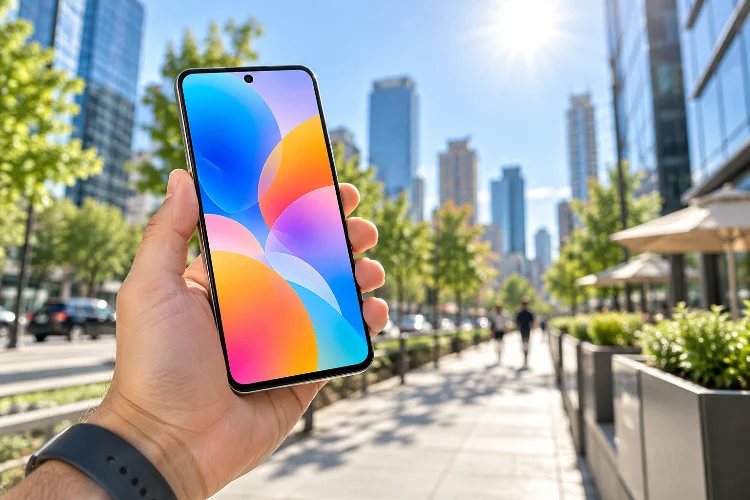
A smartphone display can look amazing inside a store and surprisingly average the moment you step into bright sunlight. Colors become harder to see, dark areas disappear behind reflections, and suddenly that impressive “3,000-nit display” does not seem quite as impressive.
That is because outdoor visibility depends on much more than one brightness number.
Modern Android phone display technologies combine OLED panels, adaptive refresh rates, automatic brightness controls, anti-reflective materials, and software that changes contrast depending on surrounding light.
Some flagship phones focus on extremely high peak brightness, while others improve readability by reducing reflections from the glass itself.
This makes display comparisons increasingly complicated. OLED, AMOLED, LTPO OLED, and LCD screens can all behave differently outdoors, and two phones advertising similar brightness figures may offer very different real-world experiences.
If you regularly use navigation, cameras, social media, or messaging outside, understanding these differences can help you choose a screen that remains genuinely readable when the sun comes out.
OLED and AMOLED Are the Current Flagship Standard
Most premium Android phones now use OLED-based displays.
Unlike LCD technology, which relies on a backlight behind the entire panel, OLED pixels produce their own light. Individual pixels can completely switch off when displaying black, creating excellent contrast and making dark content look much deeper.
AMOLED is essentially an active-matrix implementation of OLED technology commonly used in smartphones. Samsung markets its premium panels as Dynamic AMOLED, while other manufacturers use names such as Super Actua or ProXDR.
High contrast gives OLED an advantage outdoors because bright objects can stand out strongly against darker backgrounds. However, sunlight introduces another problem: reflections.
Even an extremely bright OLED panel can become difficult to read if the cover glass reflects a large amount of environmental light.
That is why brightness and reflectivity need to be evaluated together.
LTPO OLED Improves Efficiency More Than Visibility
LTPO has become another popular term on flagship specification sheets.
An LTPO OLED panel can dynamically change its refresh rate depending on what is happening on the screen. A phone may drop close to 1Hz while showing static content and increase to 120Hz during scrolling or gaming.
Google’s Pixel 10 Pro, for example, uses a 1-120Hz LTPO OLED display and advertises up to 3,300 nits of peak brightness.
LTPO itself does not automatically make a screen easier to see outdoors. Its main benefit is energy efficiency.
That efficiency can still help indirectly. Running a display at extremely high brightness consumes considerable power and produces additional heat. Reducing unnecessary refresh-rate activity gives manufacturers more flexibility when balancing brightness, battery consumption, and temperature.
So when comparing LTPO and standard OLED screens, consider LTPO a supporting technology rather than a guarantee of superior sunlight visibilty.
Peak Brightness Does Not Tell the Whole Story
Smartphone brightness is measured in nits, but advertised peak-brightness figures are easy to misunderstand.
Peak brightness may only be achievable under certain conditions, sometimes on a limited portion of the display and for a relatively short period. It is different from the brightness a phone can maintain across most or all of the screen.
This explains why a phone advertising 3,000-plus nits will not necessarily remain at that level while displaying a white webpage outdoors.
DXOMARK specifically evaluates readability under different ambient-light levels and notes that peak luminance alone does not guarantee excellent outdoor readability. Reflectance, contrast, automatic brightness behavior, and the type of content shown also matter.
The Pixel 8 Pro demonstrated this clearly in laboratory testing. DXOMARK measured approximately 2,100 nits under sunlight with typical photo content and found it especially strong at maintaining useful luminance when displaying brighter content.
In other words, sustained outdoor brightness is often more important than the biggest number on the specification sheet.
High Brightness Mode Is More Relevant Outdoors
High Brightness Mode, commonly shortened to HBM, is one of the specifications worth watching.
HBM allows a phone to increase display brightness beyond its normal manual maximum when its ambient-light sensor detects strong surrounding light. This is usually what happens when you walk outside under direct sunlight.
The OnePlus 15, for example, lists an HBM rating of 1,800 nits for its 6.78-inch OLED display. It also includes a dedicated Sun Display feature intended to improve outdoor viewing.
HBM numbers are useful because they can be closer to realistic outdoor conditions than tiny-area peak-brightness claims.
Still, the implementation matters. Phones may reduce HBM after prolonged use because high luminance creates heat and drains battery quickly.
A screen that maintains 1,600 nits consistently could therefore be more practical outdoors than one that briefly reaches a much higher figure before dimming.
Anti-Reflective Glass Can Be Just as Important as More Nits
One of the most interesting developments in smartphone displays is the move toward better anti-reflective cover materials.
Samsung’s Galaxy S26 Ultra uses Corning Gorilla Armor 2, an anti-reflective glass ceramic material designed to reduce surface reflections while maintaining durability.
This approach attacks outdoor readability from the opposite direction.
Instead of only making the display brighter than surrounding light, manufacturers can reduce how much surrounding light is reflected back toward your eyes.
Corning previously stated that first-generation Gorilla Armor could reduce reflection by up to 75% compared with a typical glass surface.
That can have a surprisingly large impact.
Imagine viewing two displays with similar brightness. If one screen produces a strong mirror-like relection of the sky behind you, its effective contrast will appear lower. A less reflective screen can look clearer even without winning the brightness specification battle.
LCD Can Still Work Outdoors, but OLED Has the Advantage
LCD panels have largely disappeared from premium Android flagships, although they remain common in affordable devices.
A good LCD can still become very bright because manufacturers can install powerful backlighting. LCD technology can also avoid some OLED characteristics such as pixel-level degradation concerns.
However, LCD pixels cannot completely switch themselves off. The backlight remains active behind the panel, meaning black areas usually appear more gray than true black.
That lower contrast becomes more noticeable outdoors.
OLED screens can combine much deeper blacks with high luminance, giving manufacturers a larger contrast range to work with. Modern OLED technology also allows precise brightness control at the pixel level.
For budget buyers, this does not mean every OLED phone automatically beats every LCD model. A bright LCD with excellent lamination and low reflections may still outperform a cheap OLED panel with poor outdoor tuning.
Implementation matters more than the technology label alone.
Heat Can Make a Bright Screen Suddenly Dimmer
There is another factor that smartphone specifications rarely emphasize: temperature.
Running an OLED display at very high brightness requires substantial power. Meanwhile, outdoor use may already expose the phone to direct sunlight and high environmental temperatures.
If you are using GPS navigation, recording 4K video, gaming, or charging simultaneously, internal temperatures can rise even further.
The phone may then reduce screen brightness to protect the panel, processor, and battery.
This means outdoor performance can change over time. A display might initially look incredibly bright and then become noticeably dimmer after twenty minutes in the sun.
Samsung’s Galaxy S26 Ultra, for example, officially lists a 2,600-nit Dynamic AMOLED 2X display. Google lists up to 3,300 nits peak brightness for the Pixel 10 Pro.
Those figures are useful reference points, but they should not be interpreted as guaranteed continuous brightness in every environment.
Real-world testing remains important for judging brigthness stability.
Which Display Technology Is Best for Outdoor Use?
For most buyers, a high-quality OLED or LTPO OLED display is currently the safest choice for outdoor readability.
Look for strong HBM performance, effective automatic brightness adjustment, low screen reflectance, and good contrast rather than focusing entirely on peak nits.
Anti-reflective glass deserves particular attention. As display brightness continues increasing, reducing reflected environmental light can deliver a bigger practical improvement than simply pushing another few hundred nits.
You should also check independent reviews conducted under sunlight or controlled high-lux environments. DXOMARK, for example, evaluates smartphone readability at lighting levels reaching 50,000 lux as part of its display testing protocol.
That type of testing provides a much more consistant comparison than specification sheets alone.
The best Android display for outdoor visibility is not simply the one with the largest brightness number.
OLED and AMOLED panels currently offer excellent contrast, while LTPO improves efficiency and helps manufacturers manage demanding high-brightness operation.
High Brightness Mode is especially relevant for sunlight use, but screen reflectivity, automatic brightness tuning, heat management, and sustained luminance can matter just as much.
Newer anti-reflective materials such as Gorilla Armor show that improving outdoor readability is increasingly about reducing reflections rather than simply making screens brighter.
Before buying your next Android phone, compare real-world sunlight tests alongside the advertised specifications. If you frequently use your phone outdoors, prioritize sustained HBM brightness and low reflectance – you may notice those improvements every single day.